
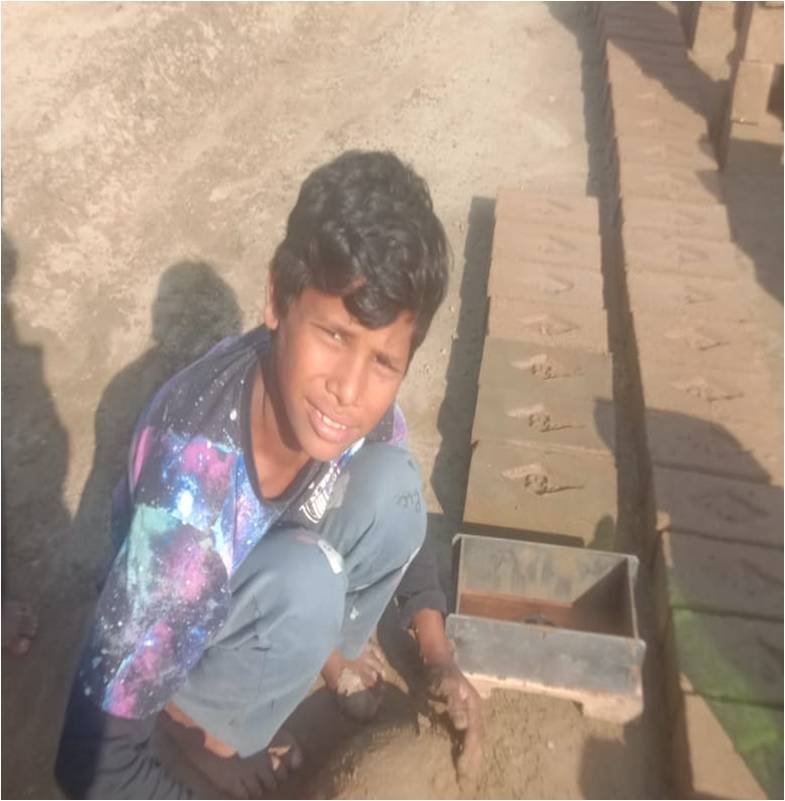
Governments must protect children from economic exploitation and from work that is dangerous or might harm their health, development, or education. Governments must set a minimum age for children to work and ensure that work conditions are safe and appropriate. (Article 32 of UN Convention on the Rights of the Child)
No child below the age of fourteen years shall be engaged in any factory or mine or any other hazardous employment. (Article 11.3 of the Constitution of Pakistan)
Pakistan ratified the United Nations Convention on the Rights of the Child (UNCRC) on November 12, 1990, which legally bound the country to uphold the rights of children as outlined in the convention.
Child labor is one of the major issues related to child rights in Pakistan that is the cause of poverty. A high level of poverty compels children to engage in labor because it is necessary for their families to meet the income level to fulfill routine basic needs like food, medicine, and utility bills. Child labor is a major cause of social, mental, physical, and moral harm to children and denies them fundamental rights of education and recreation. An estimated 12 million children are engaged in child labor in Pakistan. Pakistan’s socioeconomic problems are one of the causes of child labor, other causes being poverty, limited access to schools, poor infrastructure, and fewer opportunities.
Poverty is a major cause of child labor in Pakistan and is on the rise, given that about 42% of the population live on or below the poverty line. The lack of financial resources and limited access to social welfare programs compel families to send their children to work in factories, workshops, etc., where they work all day for minimal or next to no income. Many poverty-stricken families rely on their children for an extra source of income, often sending them to work as domestic workers, especially girls. Cultural norms and traditional gender roles often restrict girls’ access to education, pushing them into household chores or early marriages. This restricts their education opportunities, which continues the cycle of poverty in their families.
There are numbers of case studies in which parents sent their children, especially girls, to work as a maid to provide income for their families and where they were brutally assaulted by their employers, resulting in their deaths. Their parents confessed that their decision to send them to work was the biggest regret of their life. The reason for this was the fact that their parents were unemployed but could not afford to pay for their tuition, books and uniform. The distance between schools and home, especially in villages and backwards areas, makes it even more difficult to facilitate their education.
Another factor contributing to Pakistan’s high child labor rate is high levels of adult unemployment. In 2020-2021, the unemployment rate in Pakistan was 6.3%, which was lower than 2018-2019 (6.9%). The majority of the people occupying the lower socio-economic stratum are compelled to accept abusive working circumstances due to a lack of job prospects and low earnings. It includes working overtime without pay, denial of wages, social security benefits, and leave. As a result, they are compelled to send their children to seek work as laborers to support family income. This continues the cycle of child labor, as children are relied upon as a source of income for several families.
The Employment of Children Act 1991 (Section 14) “Whoever employs a child or permits a child to work in the mentioned jobs shall be punishable with imprisonment for a term which may extend to one year and a fine that can be up to PKR 20,000.
Regrettably, this Act is not enforced as it should be, which eventually does not accomplish its goal of combating child labor. This is because there is no clear vision or strategy for the implementation of the Act, as the Act alone has little impact without other policies and institutional mechanisms in place.
Author: Sabir Masih, Pakistan
Photo: a child working in a brick-making factory in Pakistan